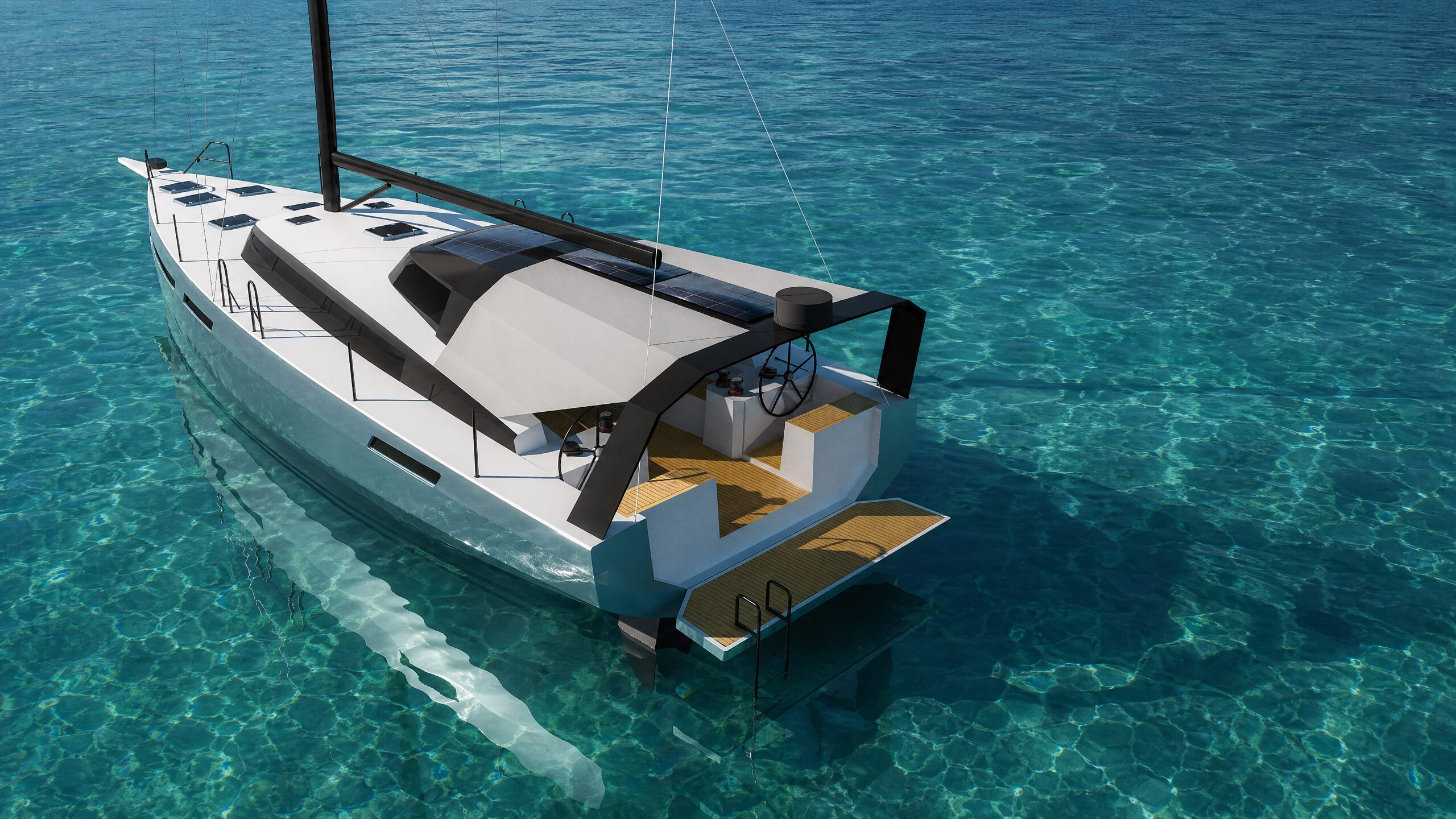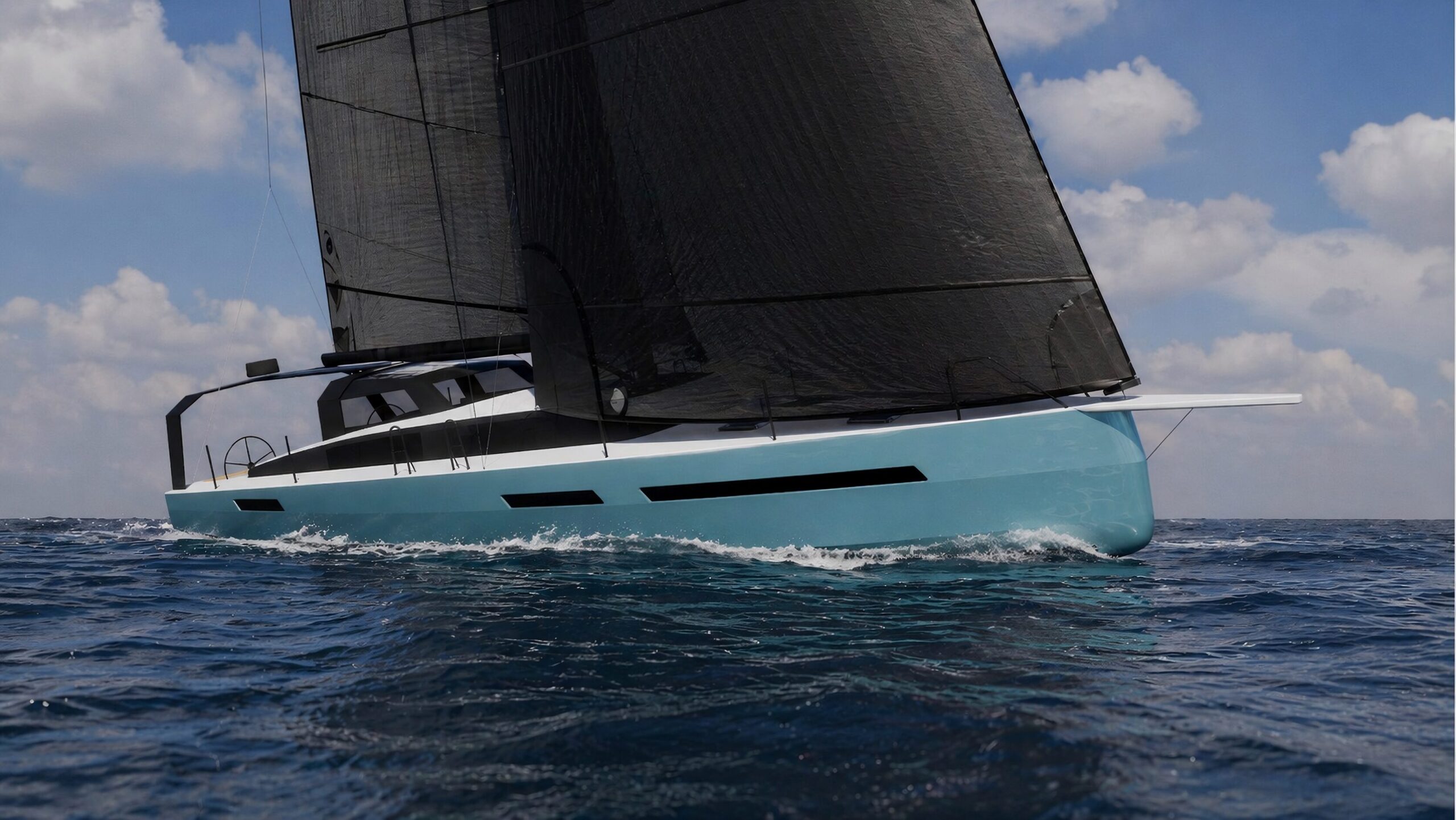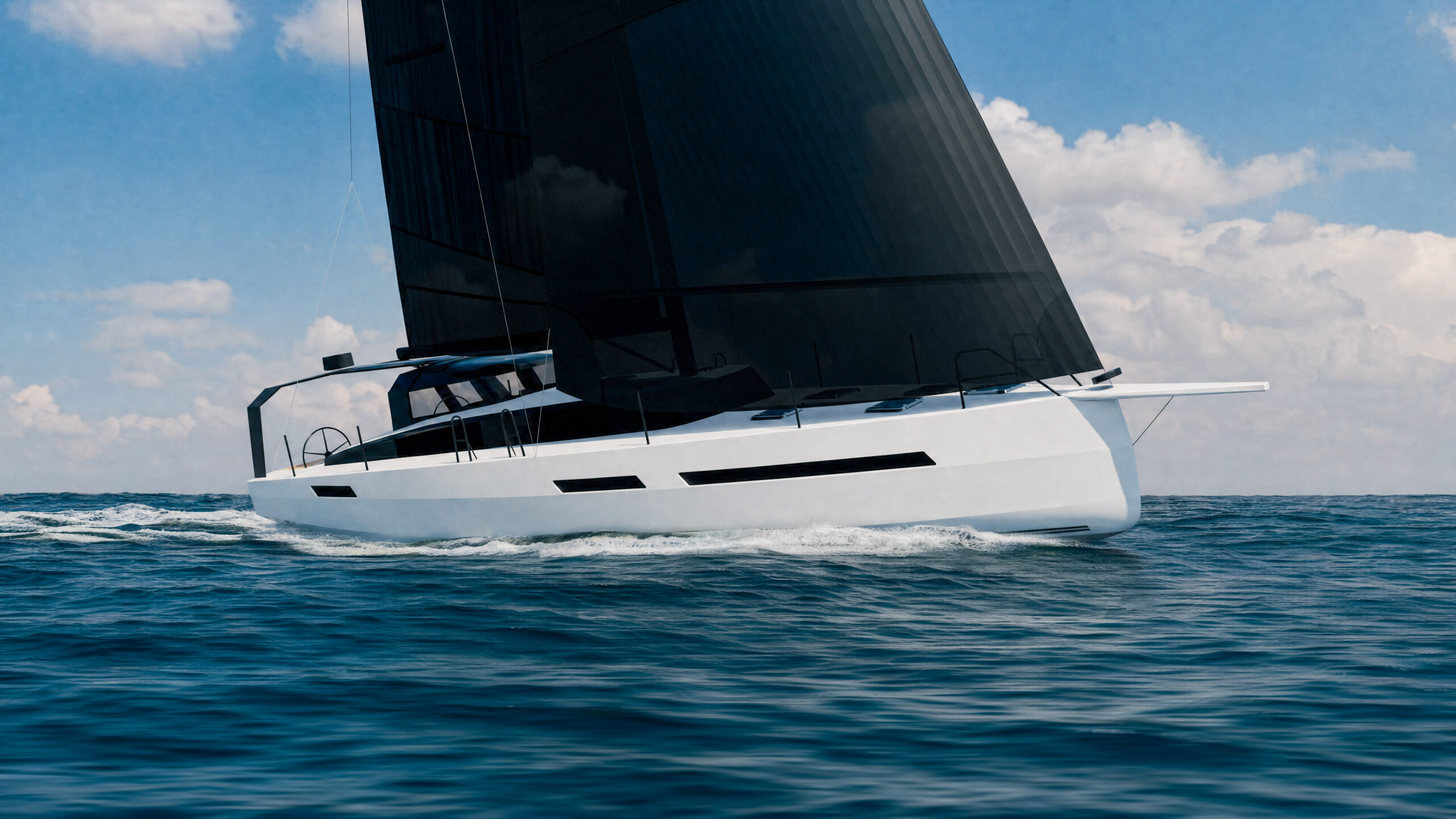
The JPK 45 FC, launched in 2016, was our very first yacht designed for long voyages, and only our second cruising yacht. Entering a new market is always a leap into the unknown… But fortunately, the JPK 45 FC has been well received and in demand beyond our wildest expectations!
Voted ‘Yacht of the Year’ upon its release, it has impressed its owners with its ergonomics, exceptional sailing qualities and load-carrying capacity, enabling them to sail round the world at high speeds… This boat has therefore represented a very substantial production run for our shipyard; we are currently completing the 34th and final unit.
After ten years of production, we inevitably sense a desire for something new among buyers, and potential developments emerge in terms of architecture, design and ergonomics, which we must incorporate.
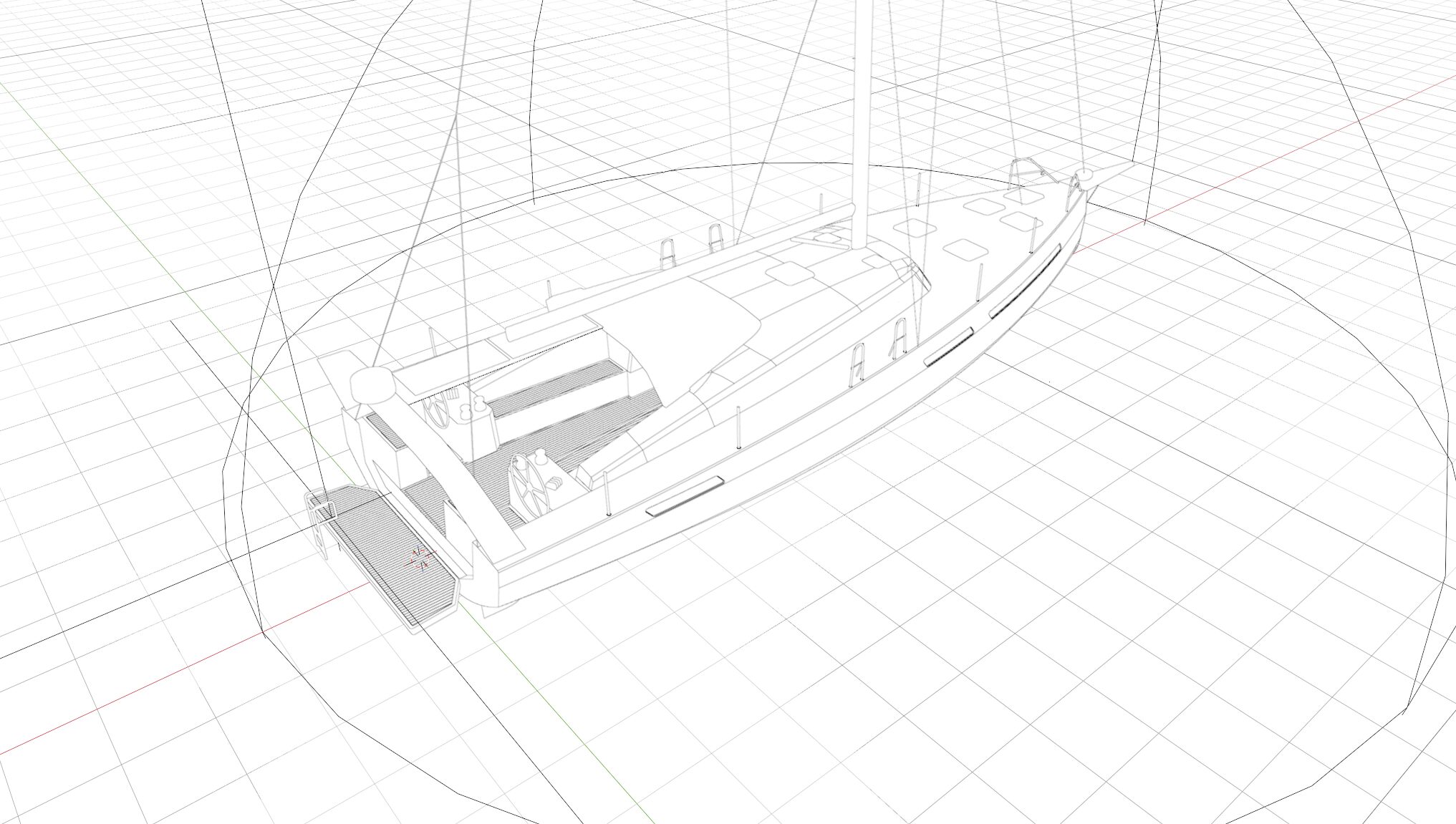
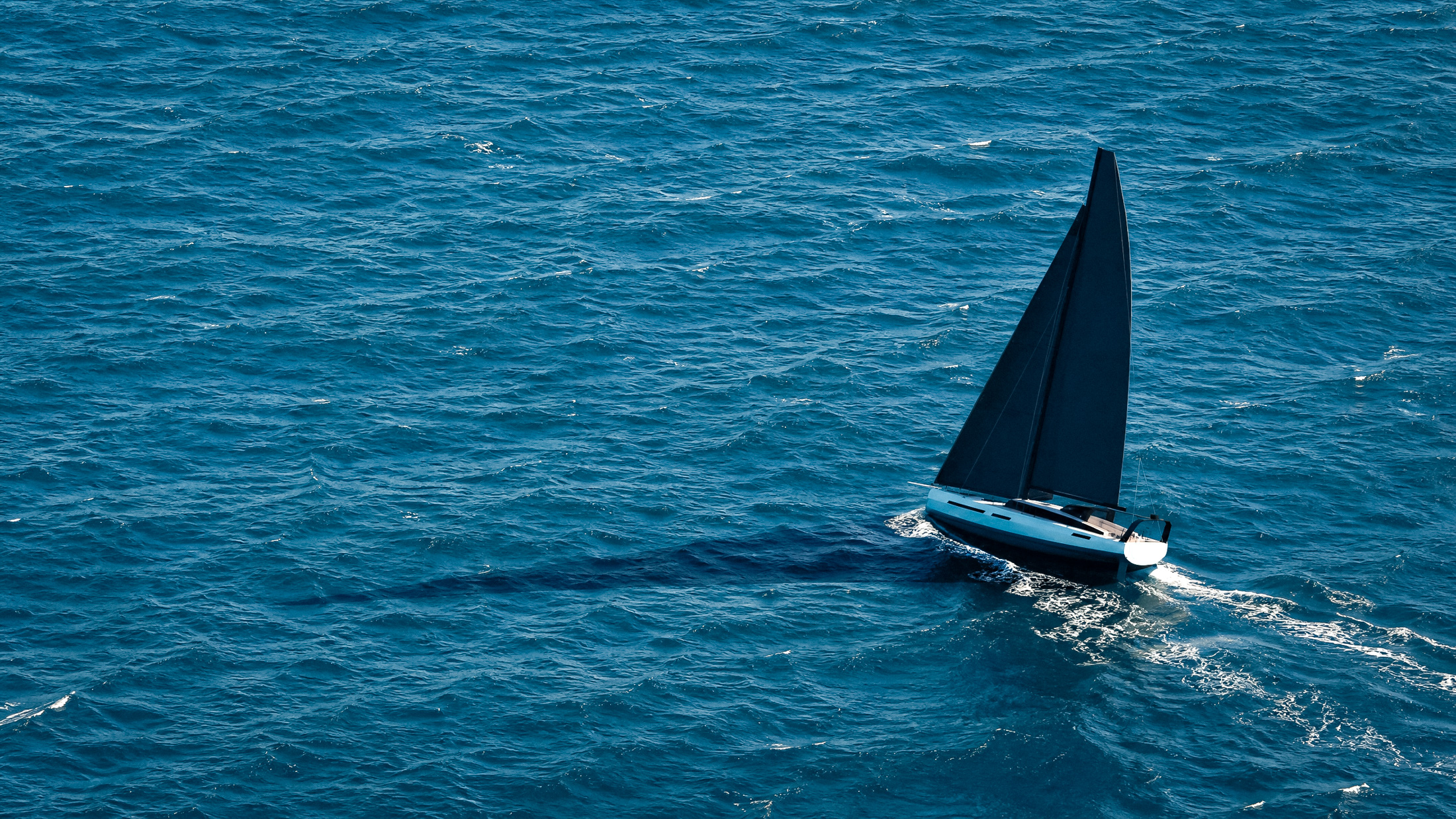
The design of the JPK 48 FC therefore aimed to achieve the following objective: to refresh our long-distance cruising yacht whilst capitalising on the strengths of its overall concept. Quite a challenge, given how hard it was to find fault with its predecessor! Here we present four of the key areas of development.
1/ More space: 3 feet longer
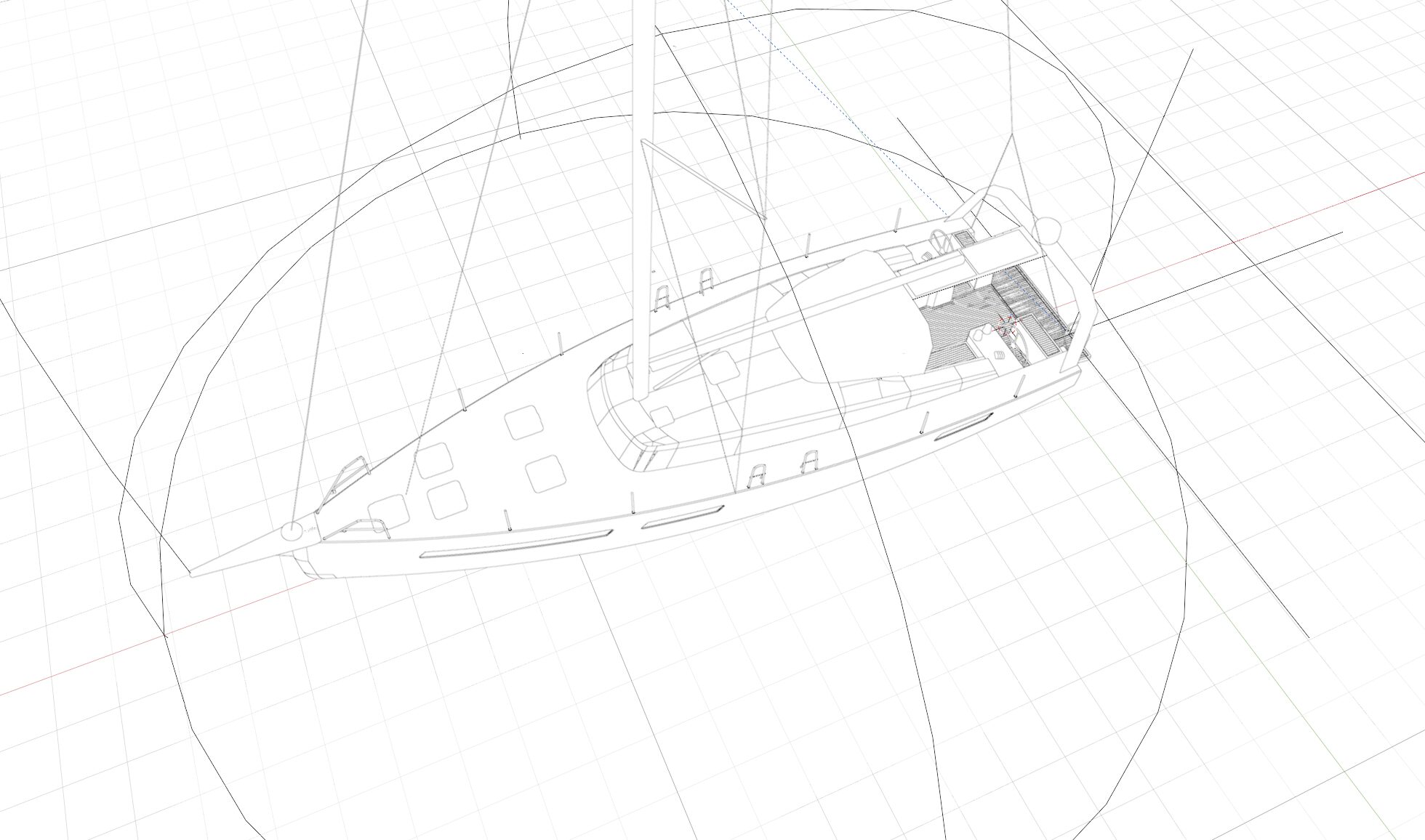
Adding three feet to the JPK 48 FC was clearly not an end in itself. It was not so much a question of creating a larger boat ‘for the sake of it’, but rather of achieving a minimum size capable of accommodating all the features we wanted to incorporate, both inside and out.
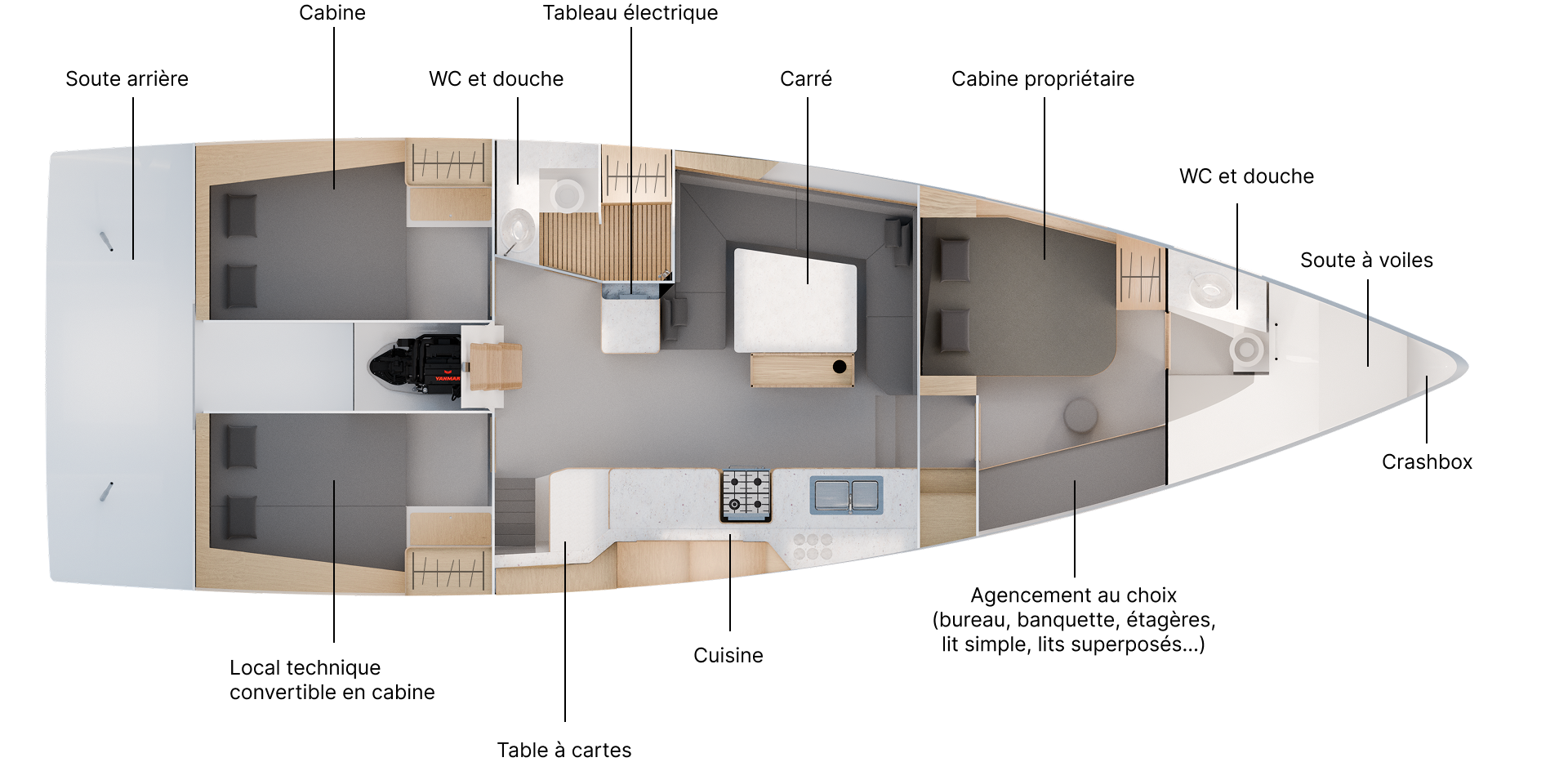
These extra 91 centimetres (and the resulting increase in beam) have enabled a range of layout changes to the JPK 45 FC:
- more space in the cabins, in the saloon and along the galley;
- a redesigned bathroom with a separate shower;
- a completely remodelled owner’s cabin opening onto a foredeck that can be configured in numerous ways;
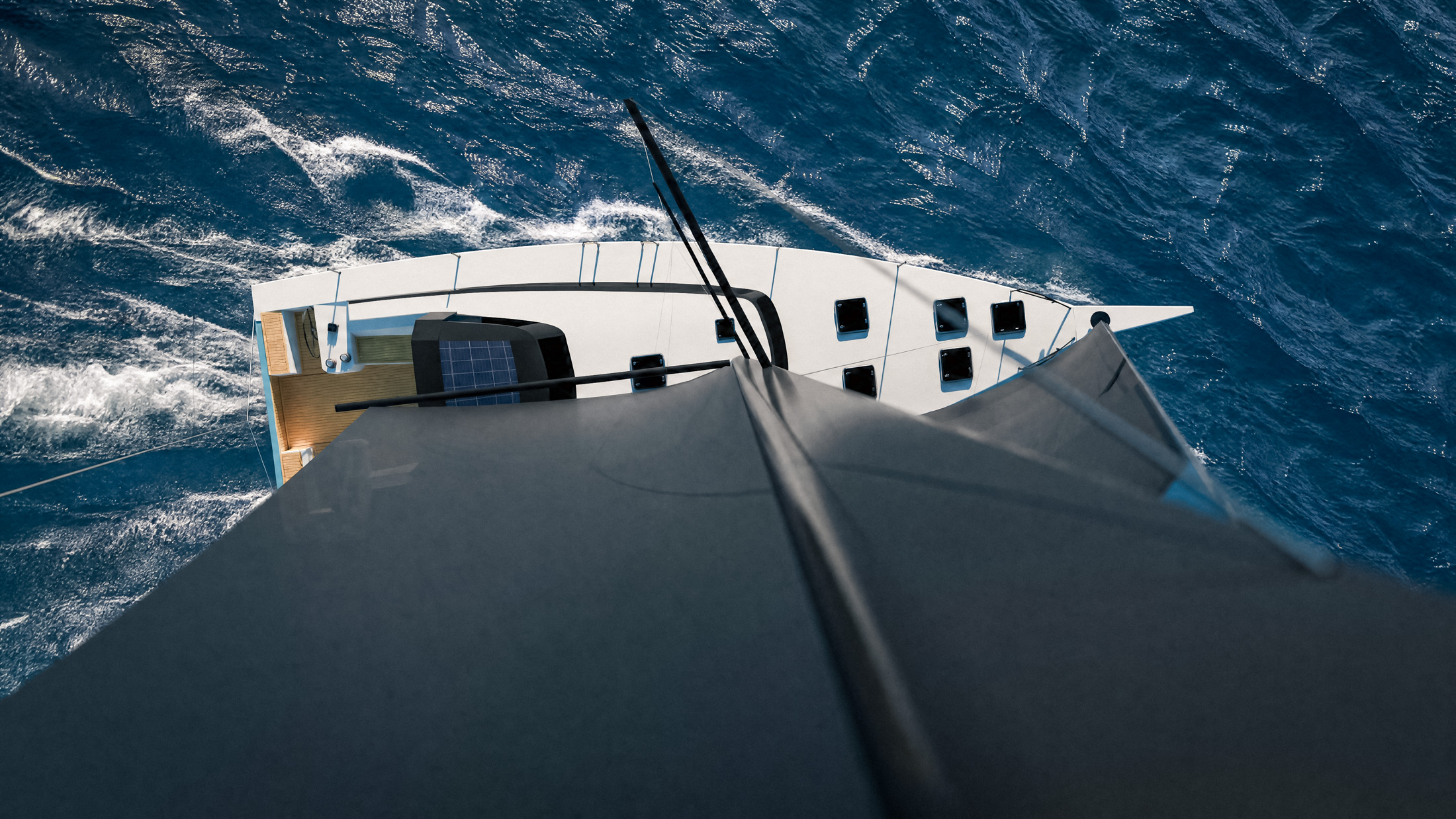
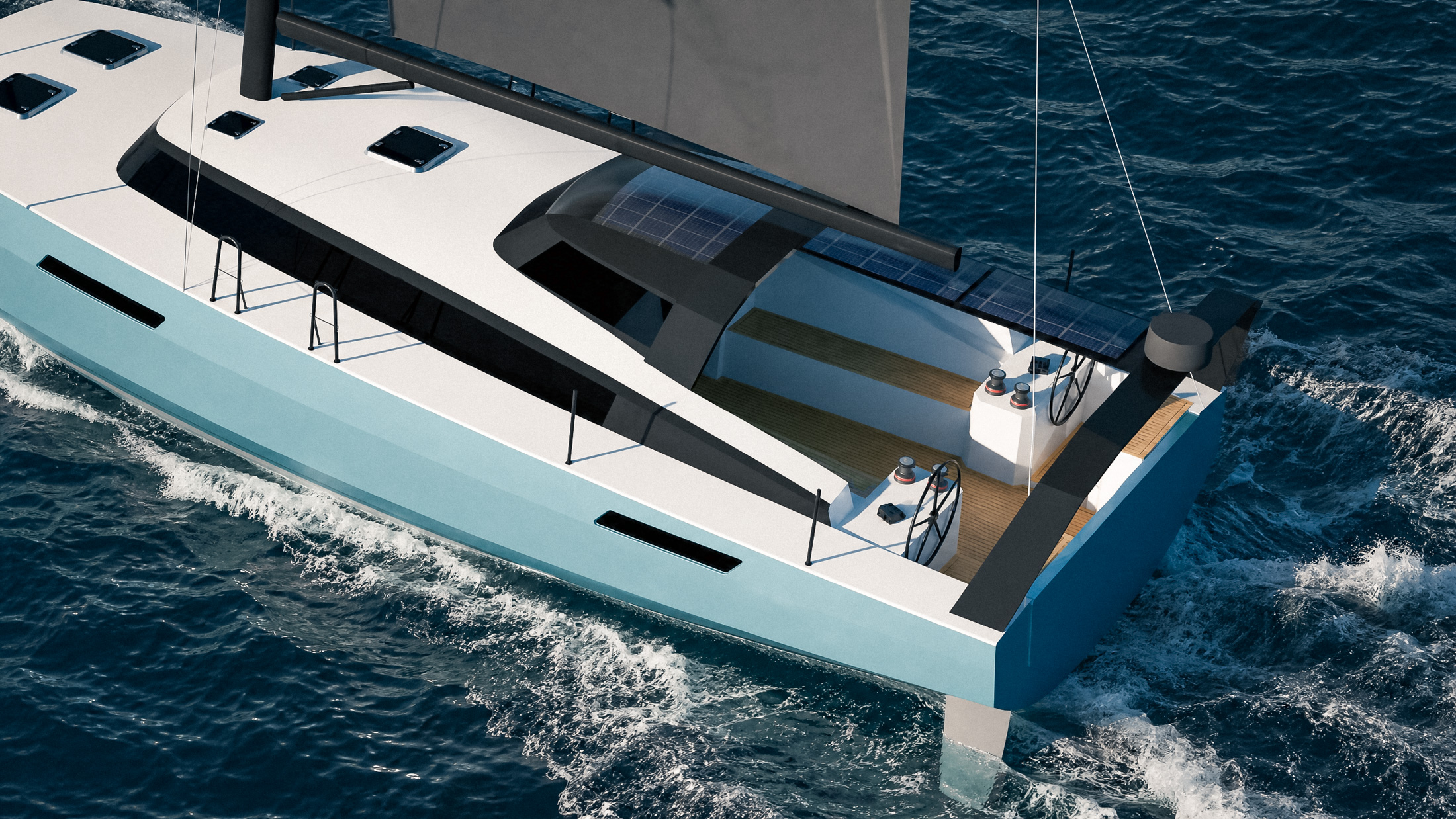
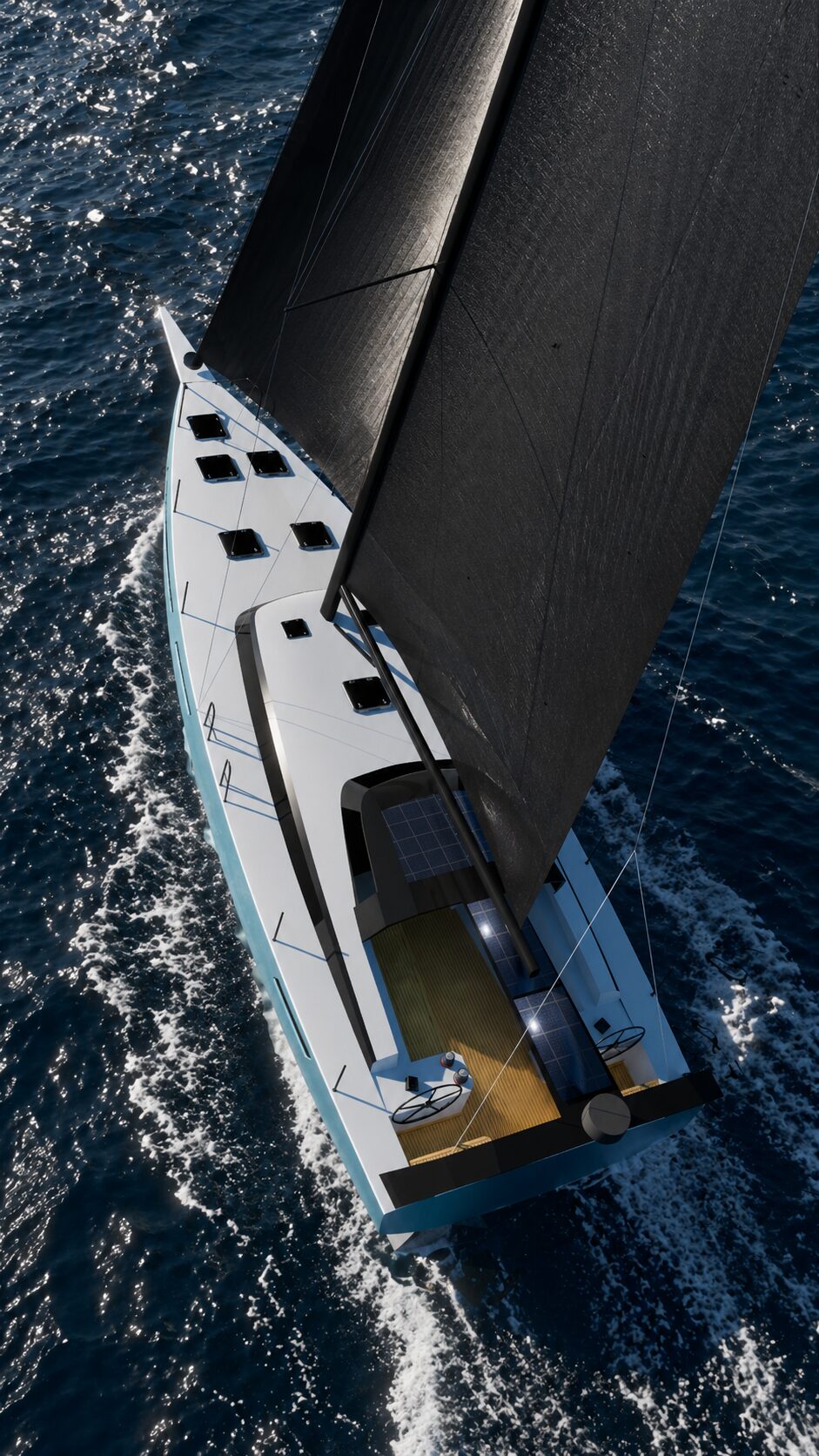
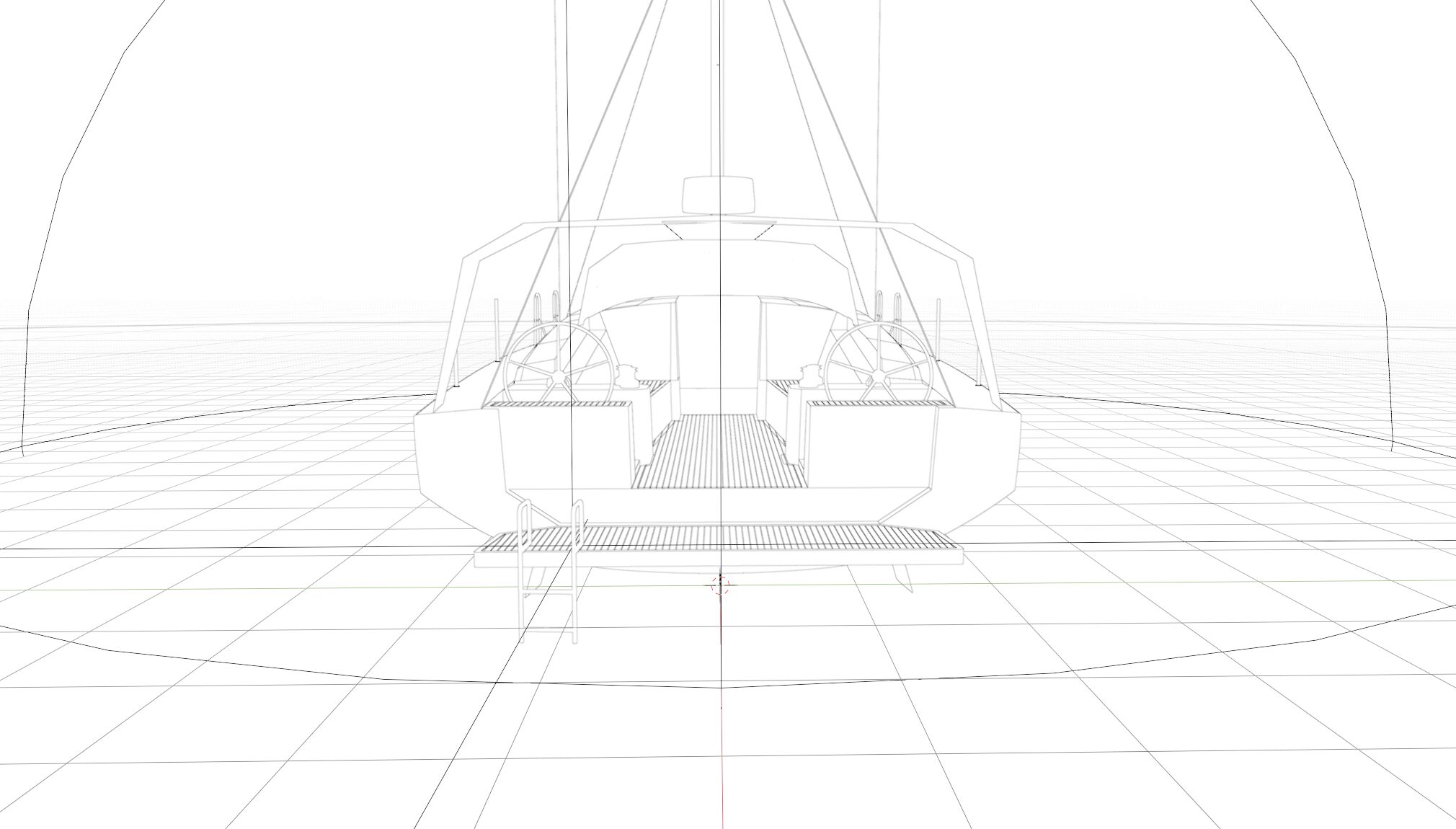
- an even more spacious cockpit, including a tilting platform;
- more storage space.
This quest for additional space was not without its limits: we wanted to retain a highly manoeuvrable and practical boat, capable of being sailed by a small crew or solo. This is the real strength of these limited-length designs (45–48 feet), which also allow the overall length to remain below the 16-metre threshold, thereby avoiding significant logistical and cost constraints in ports.
2/ An improved performance hull
In 2015–2016, when designing the JPK 45 FC, we asked Jacques Valer to design a boat capable of carrying a substantial voyage-related load (water, diesel, equipment, passengers, etc.) without its performance being unduly compromised. This flexibility resulted, amongst other things, in a fairly deep hull draft and a quite round rear rocker.
Our trials demonstrated the surprising success of this design: a fully loaded JPK 45 FC maintained a remarkable level of performance compared to the same boat when light… Which is rarely the case on fast cruising yachts! This very (too?) wide margin of tolerance gives rise to the JPK 45 FC’s only minor flaw: a slightly delayed transition to planing speed, and downwind stability that could be improved in rough seas.
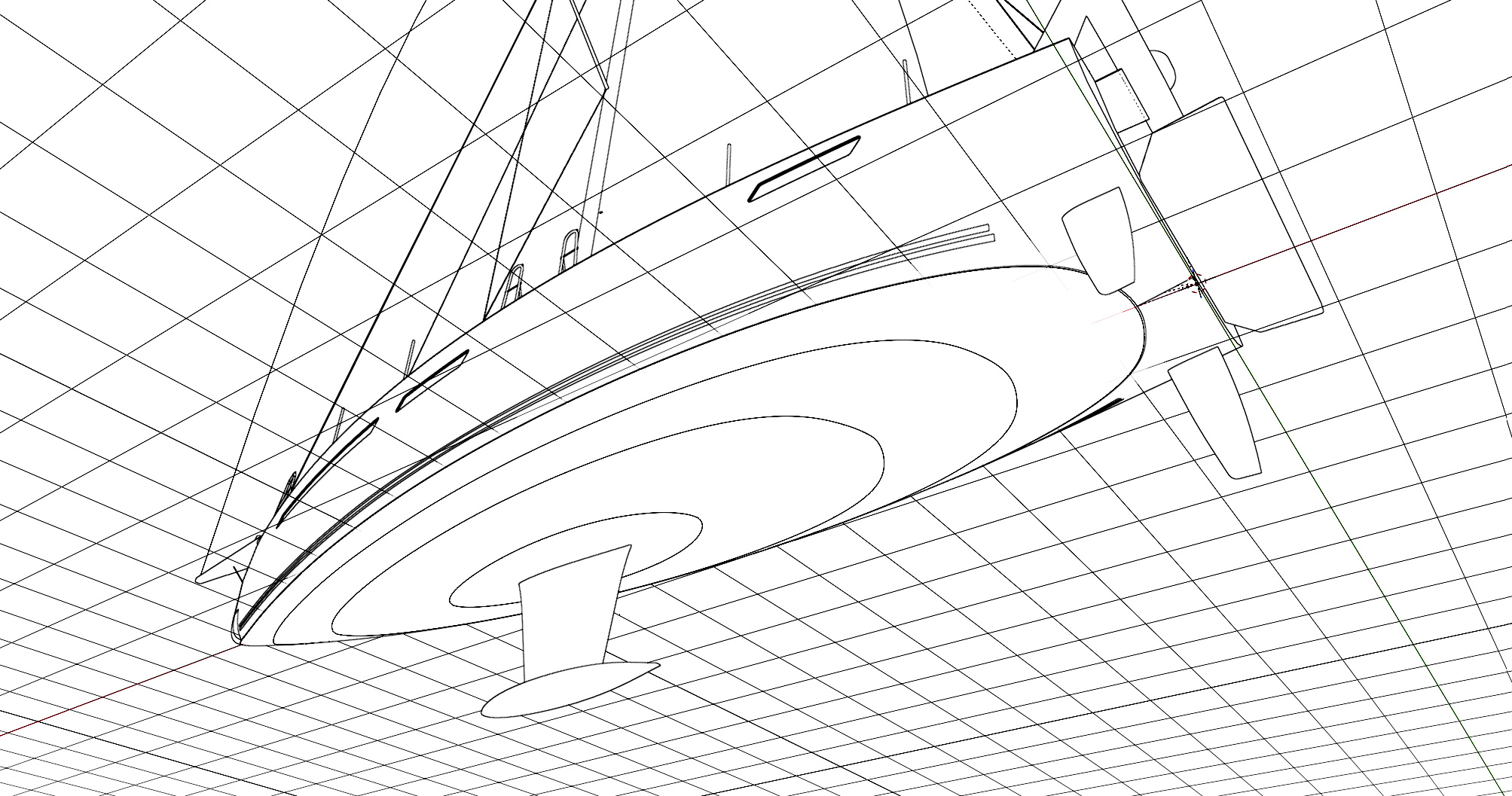
On the JPK 48 FC, Jacques has therefore taken the liberty of reducing this load tolerance margin slightly: the hull’s draft is slightly shallower and its aft camber is straighter. The forward sections are also fuller, and the beam at the waterline has been increased (two design influences from the JPK 1050), which provides a gain in hull power without additional ballast, and thus a reduction in overall displacement.
The benefits of this new design are numerous:
- earlier planing;
- speed and superb stability downwind and reaching;
- the ability to sail in light winds at all angles, meaning less time spent motoring;
- whilst retaining superb performance upwind and genuine load tolerance, making the JPK 48 FC a rather unique boat in the fast cruising segment.
Ultimately, the approach is very similar to that taken when moving from the JPK 38 FC to the JPK 39 FC, which was immediately validated on the water during our first sailings, but above all by feedback from our customers. In one of our recent news articles, Richard & Julia told us about their North Atlantic crossing aboard their JPK 39 FC Photon Infinity: even when sailing at the limit at times, their boat never broached!

3/ Weight centring
Alongside this new hull design, we have spent time exploring ways to centre the weights more effectively, which offers significant benefits in terms of reducing pitch and improving performance.
The batteries have therefore been moved forwards from beneath the companionway to a new dedicated compartment, in the form of a console facing the companionway. This kills two birds with one stone: the weight is more centrally located, and the space created makes it easier to fit larger battery capacities, depending on customers’ needs.
The anchor chain has been routed back towards the mast via a channel running beneath the deck, leading the chain into a dedicated chain locker, roughly where the mast is located. This compartment has its own integrated and accessible windlass and is relatively vertical in shape. Once again, this serves two purposes: it centres the considerable mass of the chain, whilst also storing it vertically, which prevents it from becoming tangled.
The tanks The tanks for water, diesel, grey water and black water have been concentrated in the centre of the boat, beneath the decks and below the waterline: this centres the mass and lowers the centre of gravity in one fell swoop!
Finally, Jacques has opted for a classic rigwith a backstay, which lowers the rig’s centre of gravity: not only does this improve comfort and upwind performance, but it also allows for more tuning options.

4/ Design: building on the best of recent successes
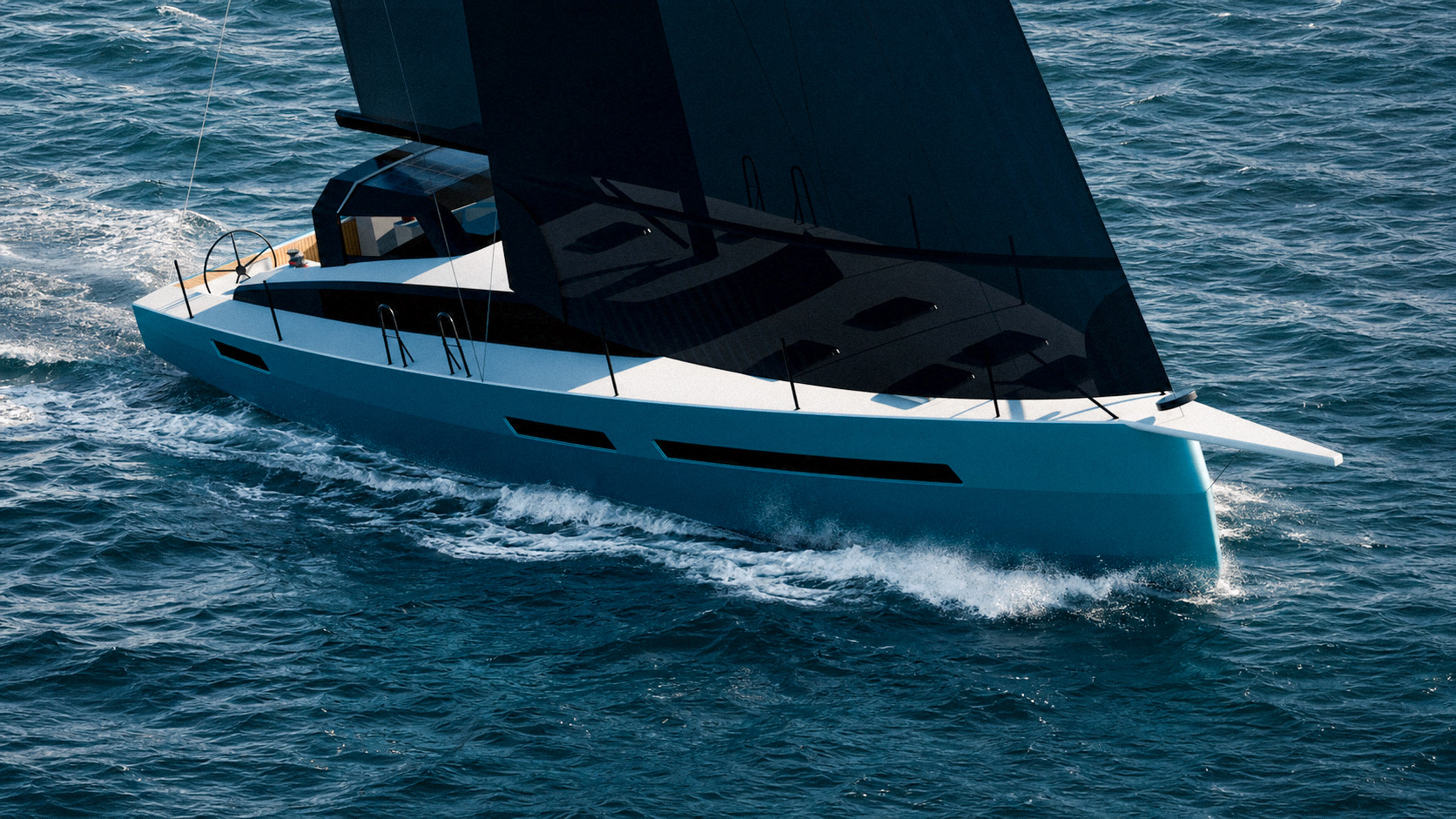
One of the most noticeable visual changes on the JPK 48 FC is its new design, which has been given a fresh new look by JB Dejeanty. Let’s take a closer look at some of the improvements:
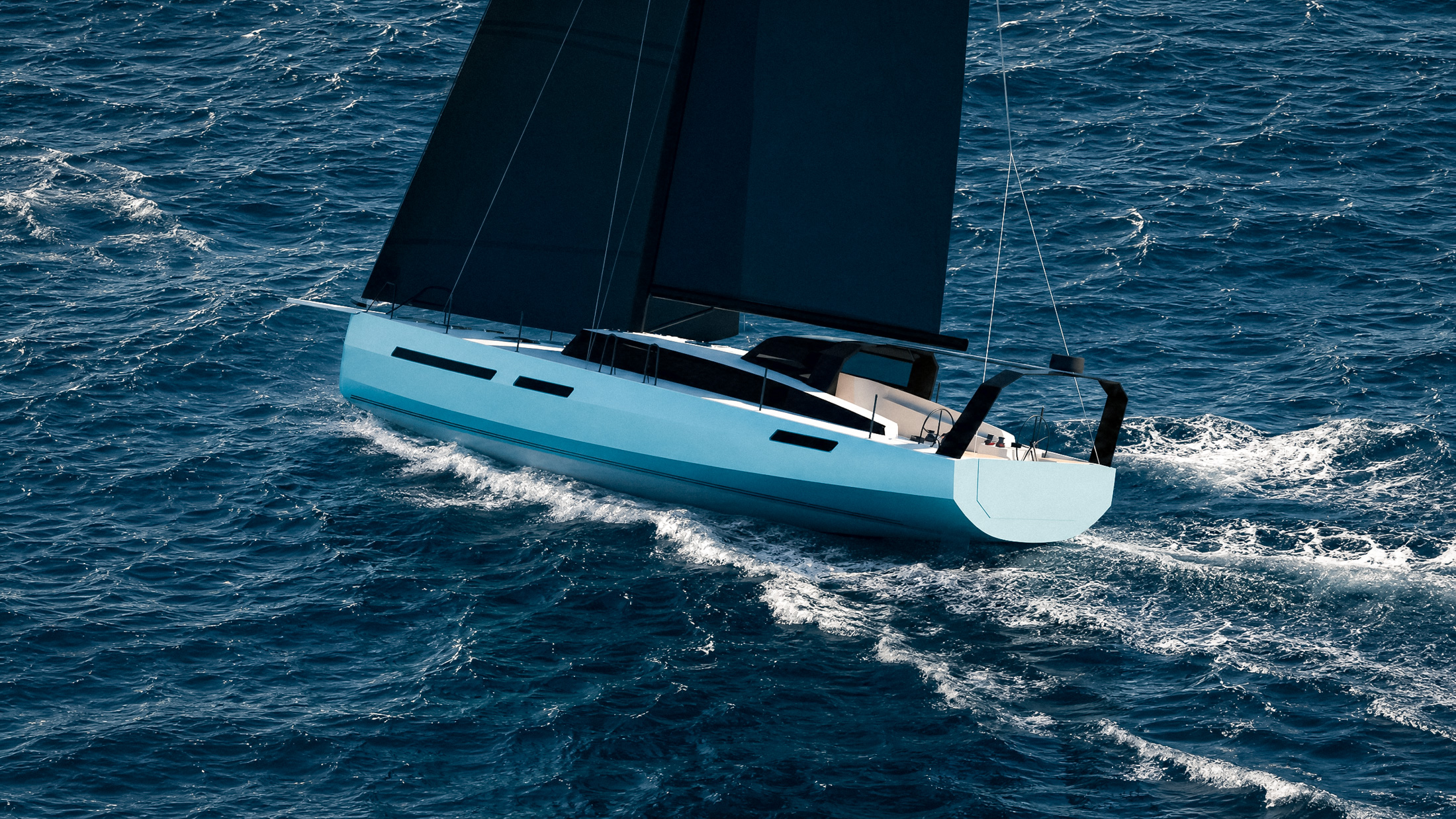
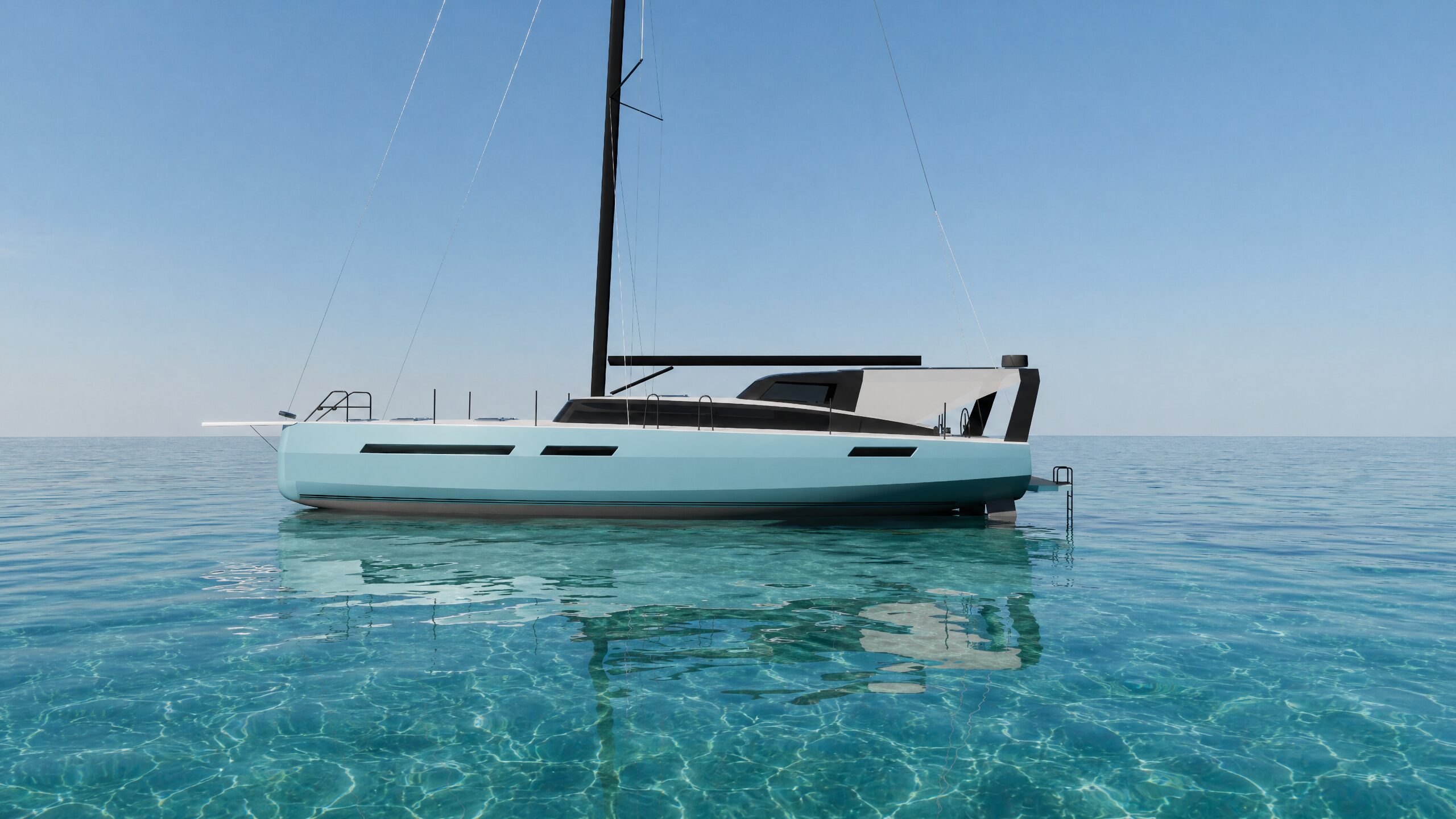
Its roof is inspired by both that of the JPK 39 FC and our motorboat, the Nomad 40: two of our models that have attracted the most attention on the pontoons, with their sleek, distinctive styles that are unique in the cruising world. It is, of course, panoramic – a hallmark of JPK cruising yachts. The interior views this affords are exceptional, and it even gains a few centimetres in height. The hull also features larger openings, both in the saloon, along the galley, and in the cabins.
The JPK 48 FC’s rigid watchhouse – or dog house as it’s commonly known – has also been given a facelift to continue providing a comfortable watch area sheltered from the elements, whilst blending more seamlessly into the boat’s silhouette without adding too much bulk to the superstructure.
A major innovation is the connection between this doghouse and the aft gantry. This allows for a large array of solar panels to be fitted, provides easy access to the boom and lazy bag, and can support a bimini whose contours match those of the doghouse: it thus provides full protection for the cockpit and remains usable whilst sailing.
Another design feature inspired by the JPK 1050 is the chamfered edge at the top of the hull plating. This chamfer is not only aesthetically pleasing but also helps to reduce weight in the upper sections of the hull, further lightening the fast cruiser.