When Piet Bouma and Ester decided to leave their home, their jobs, and their life in the Netherlands to go sailing around the world, they knew they would be spending a lot of time aboard their future boat. They also knew they wanted to go one step further: reduce their carbon footprint and gain autonomy through a hybrid-electric propulsion system.
This is how Just Fantasy was born, the first JPK 39 FC equipped with a hybrid electric drivetrain. A slightly unconventional project, which required a few hours of reflection, many discussions with the JPK team, and a good dose of ingenuity to fit all this electrical equipment on board!
Two years after her launch, Just Fantasy has already covered more than 14,000 nautical miles and has just completed an Atlantic circuit. A year of sailing that ultimately represents the best possible test bench for this installation: hydro-regeneration under sail, electric propulsion, solar charging, life at anchor… and even a few situations where the electric system proved particularly fun. Upon returning to Brittany, Piet stopped by to say hello to the JPK team, and we naturally wanted to know: after a year of sailing, would he choose electric again? The answer is in his story.
27 July 2026, Piet Bouma, fastcruising.yachts
After a one-year tour on the Atlantic, we are sailing right now the last leg back home to Den Helder in the Netherlands. Home does not mean a house, since we sold this in 2025. We quit our jobs, said goodbye to children and family, and went sailing.
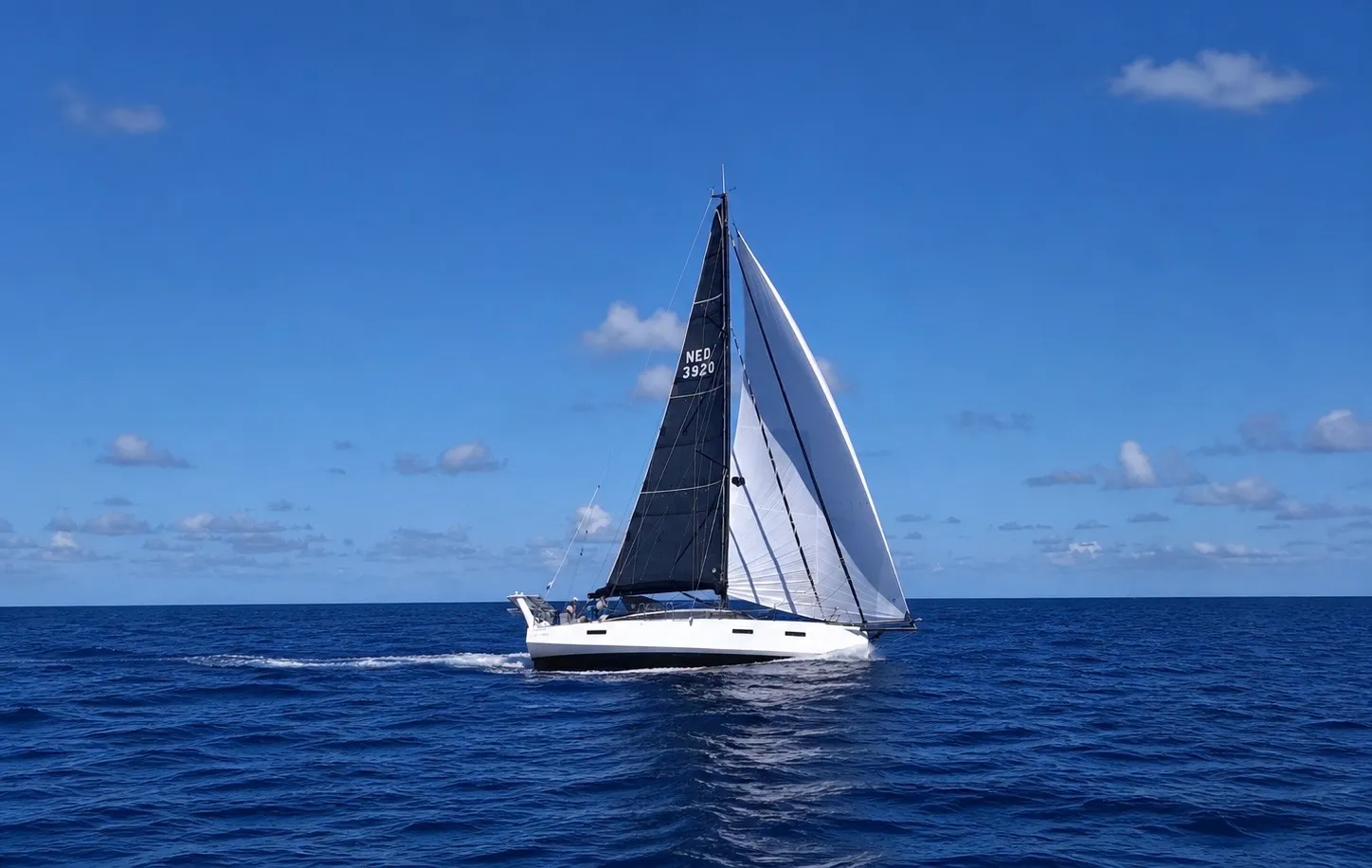
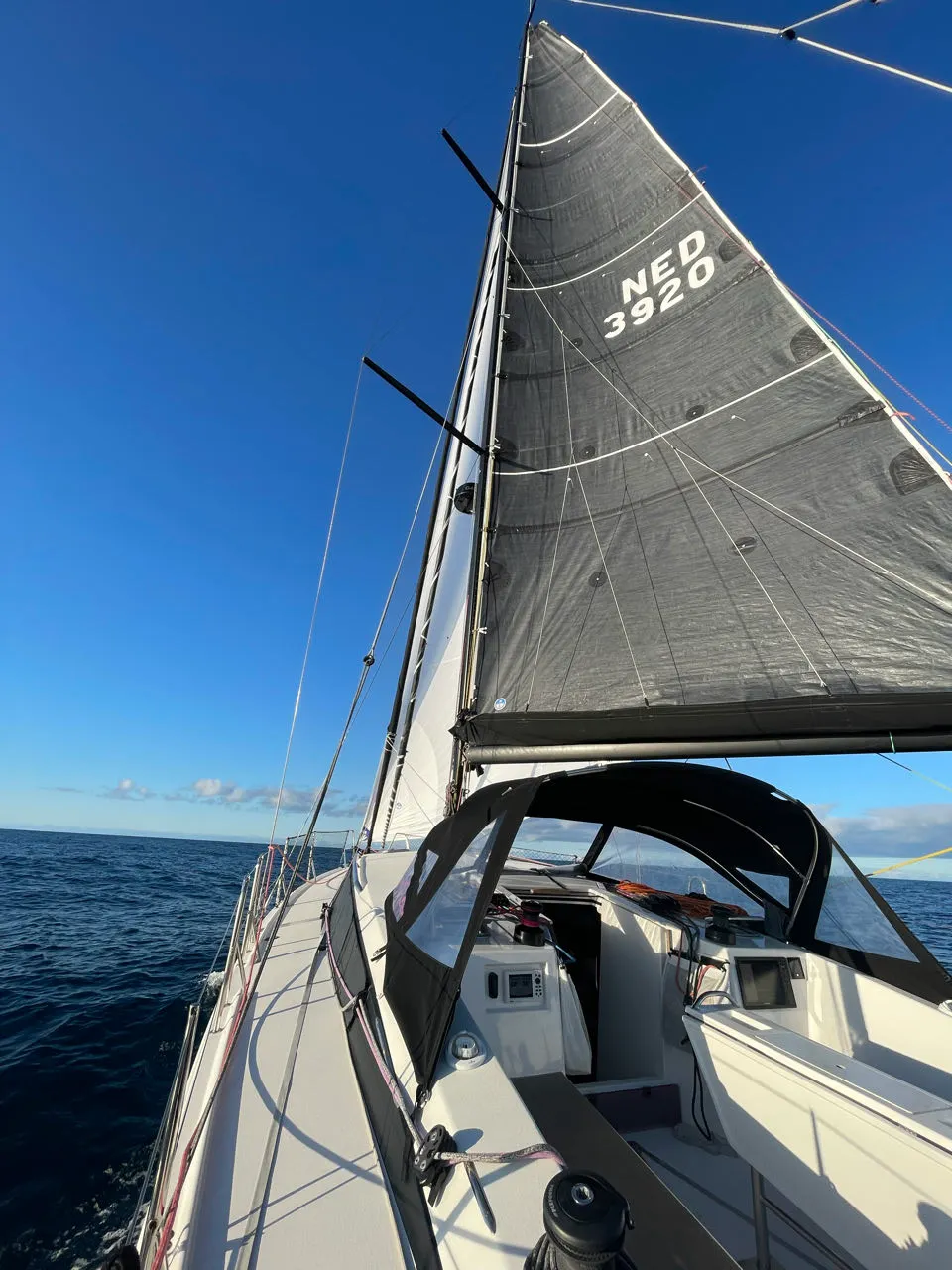
The idea was to circumnavigate the globe in three years. No better yacht for us than our Electric Hybrid JPK 39 FC, named Just Fantasy. She was launched at La Basse on 11 July 2024. Ester and I were very excited since Just Fantasy became reality.
We have sailed over 14,000 nautical miles and, on our return trip, we obviously stopped at Larmor-Plage to have a short visit at the factory. Jean-Baptiste asked me if I would choose electric if we did it all over again, and if I could write a story about our experience from our past year living on an electric boat.
From the beginning
From the beginning, our plan was to live and sail with Just Fantasy for an extended time. The technical installations on board should minimise our carbon footprint and increase our autonomy. Therefore, we wanted an electric-hybrid sailing yacht.
An earlier deal with another shipyard in Brittany fell through on the electric aspect, after a signed contract and two years of waiting. So we went to JPK knowing this would become affordable after another three extra years of waiting, working and saving.
No kidding, we felt very welcome at JPK and the shipyard was willing to try to fulfil our wishes. We opted for an Oceanvolt electric saildrive with high-performance hydrogenerating capabilities and asked to add a diesel generator. But would all this fit in the JPK 39?
Imagine fitting a 29 kWh battery bank, a 90-litre diesel tank, a big Victron charger-inverter, a bulky isolation transformer, a 250 Ah service battery, four battery chargers, a watermaker and even more components. After sketching it myself, I thought it would be possible, and at JPK they gave us hope.
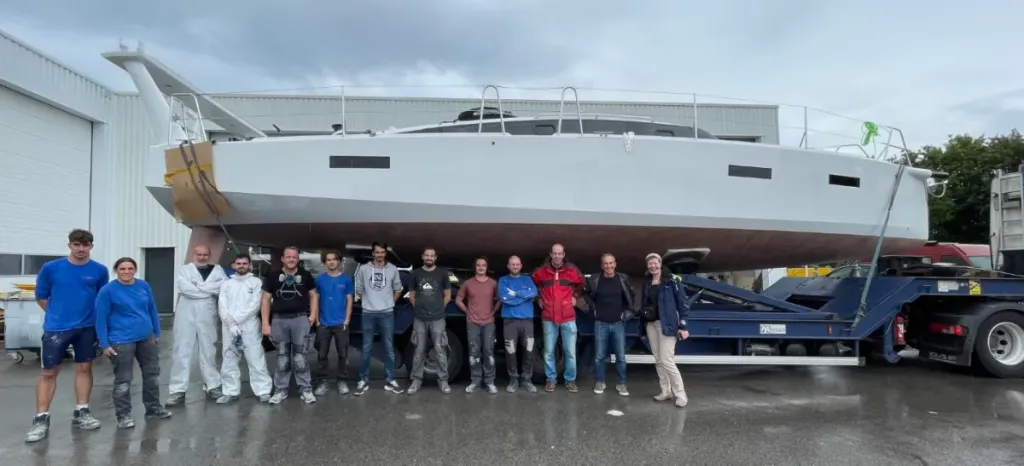
When the time neared to start with our number 20, we visited the shipyard and, together with Julien Auburg, we did a mock-up test with core foam boxes used as dummies for the real products. This test confirmed the idea that it was possible. Now JPK could continue and execute the design.
A busy time started and I had a lot of contact with Julien. It took the shipyard more time to build Just Fantasy than a regular diesel boat, but on 11 July 2024 she was launched and it was time for the proof of the pudding.
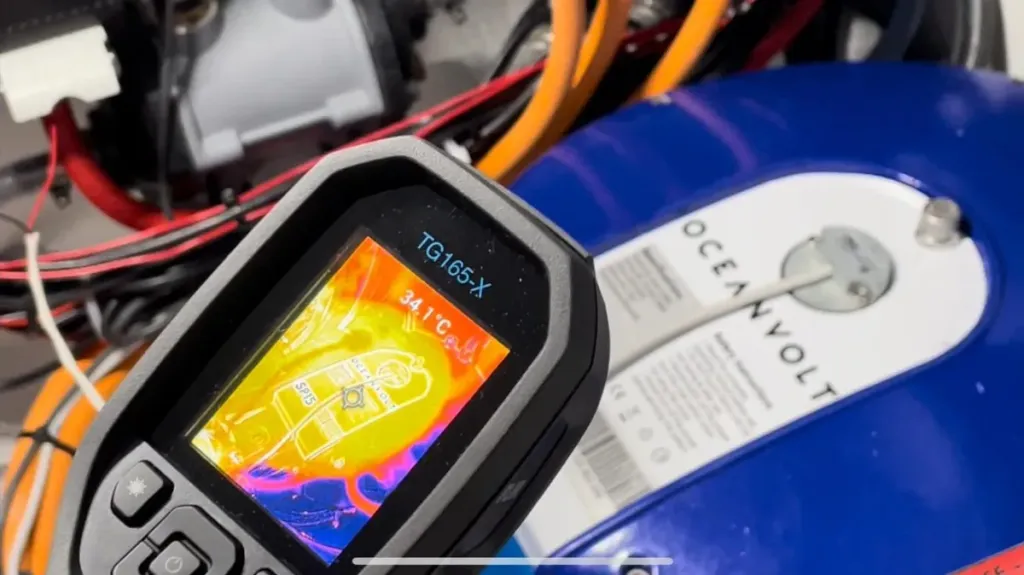
The commissioning and testing was done by E-NAV, the supplier of the Oceanvolt package including the Fischer Panda diesel generator. In the tests, they did full-power propulsion tests tied at the dock, measuring the capacities and using a thermosensitive camera to monitor the temperature of power cables, electrical connections and individual components. There was no overheating and everything performed as expected.
One year of testing at sea
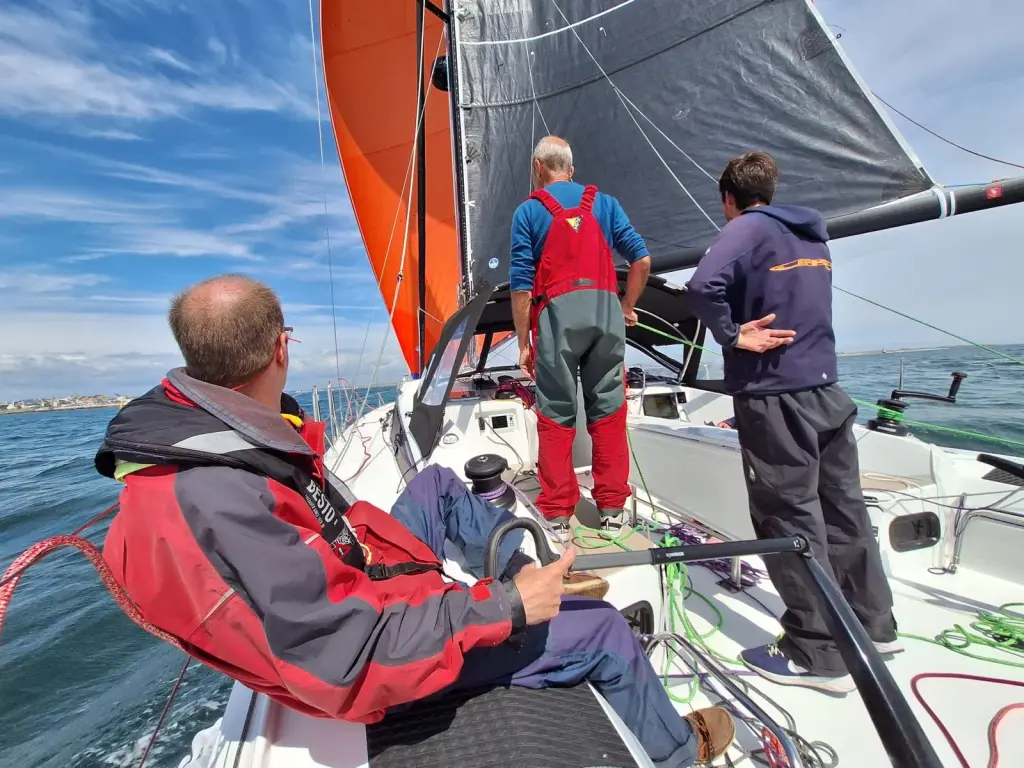
As the sail charter company fastcruising.yachts, we sailed for a year in the Netherlands and, in July 2025, we left Den Helder to sail into the world. We used our systems over the past year on a daily basis, so we can say it has been tested well.
Yes, there have been malfunctions with the Oceanvolt and Fischer Panda systems, but we have been supported very well during our voyage and sometimes even instantly.
I remember, on our way to Suriname, we were surfing down a big wave with 16.4 knots boat speed and the Oceanvolt hydrogenerator on. It was at really high RPM and kicking in 2.5 kWh at that moment. I was on watch during the night, and I sent a WhatsApp to Oskari of Oceanvolt to ask whether we should stop the OV at these high speeds. I knew Oskari was sailing the Atlantic (ARC), and during his night watch he immediately replied: “This is no problem, you can go faster.”
When E-NAV nominated our yacht for the ‘Electric Yacht of the Year 2026’ election (by the AFBE), I posted a YouTube video with the following benefits of sailing electric.
The benefits of electric boating
Electric motoring and motorsailing is silent.
Electric motoring on green energy does not produce carbon dioxide.
Motorsailing in light winds at low RPMs takes very little energy.
Your electric engine is on idle and always ready to run instantly.
Electric engines require less maintenance (costs).
Electric engines are less prone to malfunctioning.
You cook on induction, so no gas on board (more safety).
No costs for gas.
No lugging around gas cylinders. No scavenger hunt in strange countries.
You take a lightweight electric outboard on your dinghy, easy to store safely every night.
No costs for dinghy fuel.
No petrol, better safety.
Often ‘free electric fuelling’ at marinas.
Endless renewable fuel in the middle of the ocean (no array of jerry cans on deck).
Different types of electric sailing…
You can distinguish three different stages during a world sailing tour. And these are at anchor, the long sailing legs and day sailing. They have an impact on your electrical system and life aboard:
At anchor
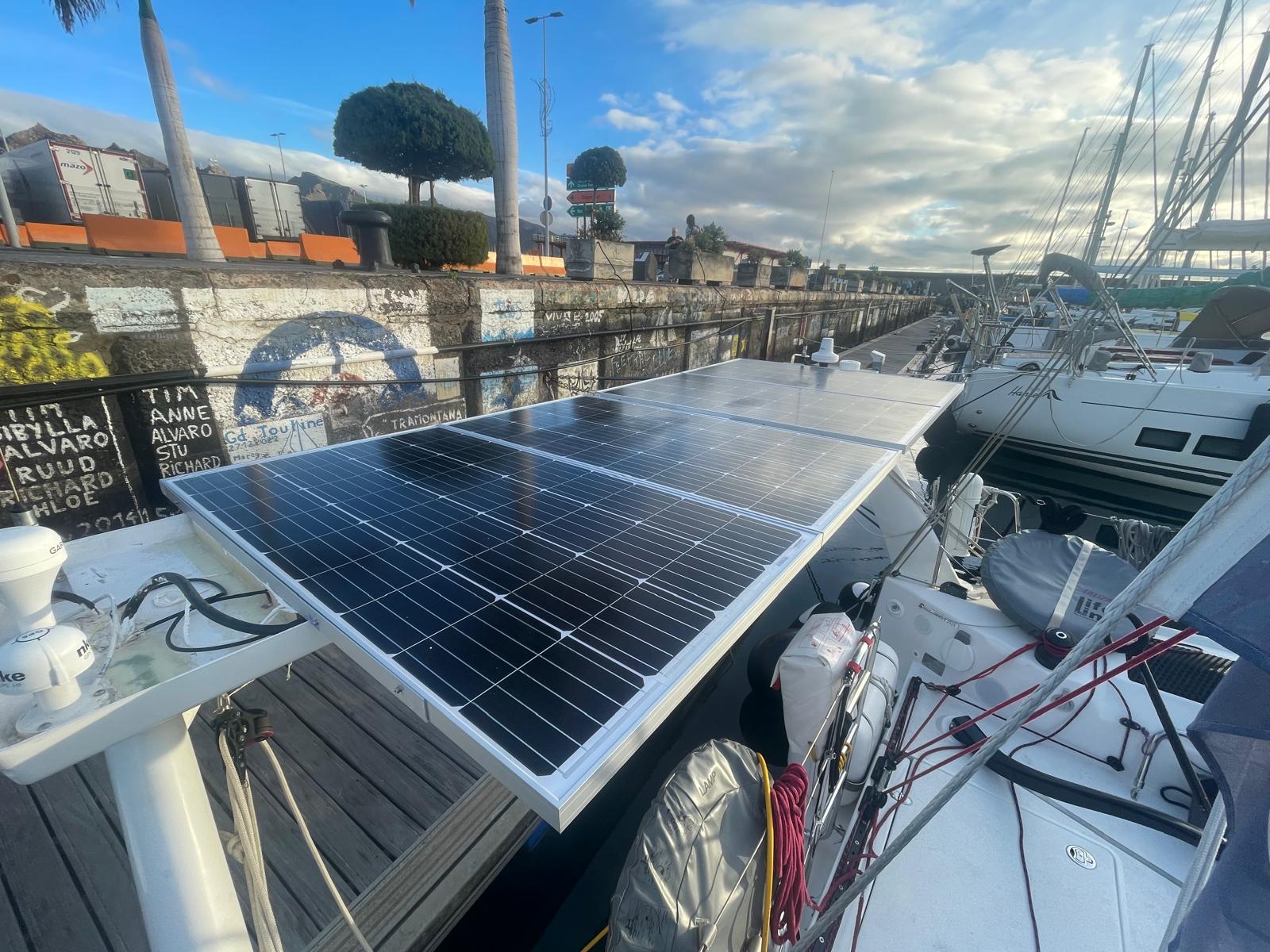
At anchor you don’t have the hydro-regeneration. In this case, you really want sufficient solar energy. I substituted the standard JPK two-panel combination, suitable for 12V systems, with a four-panel combination suitable for our 48V main battery pack (MG). With four Victron panels, we harvest 2 kWh a day (this is the last monthly average over June-July).
If we did not have the diesel generator, we would need to adjust our consumption accordingly. This is possible, but we like the comfort. We used cooling fans on board and external solar shading sheets on deck when at anchor, so no air conditioning. Our biggest consumers at anchor are cooking, computers and charging the outboard.
Long sailing legs
On long sailing legs, you definitely don’t need a diesel generator. The solar and hydrogenerator input are sufficient to charge your batteries.
On our passage from the Caribbean to the Azores, we had seven days with no or little wind (no hydro-regeneration). When the batteries were getting low (50%), we had meals which were suitable to eat without cooking (heating), and they tasted well.
The Oceanvolt Servoprop SP15 supplied in the range of 600 to 1.2 kWh at hydrogeneration. We start it up when sailing above six knots boat speed. The speed reduction is around 0.5 knots when it is on.
The regeneration does make some extra noise, but it is nothing compared to a diesel engine. It has to be said, our Fischer Panda in its acoustic casing and behind the stairs of the companionway is pretty silent.
Day sailing
The daysailor has one benefit, because there is often no electric shore power limit when charging in the marinas. Our battery bank has a capacity of around 30 kWh and if we arrive with 50%, we recharge about 15 kWh ‘for free’. So at a price of €0.20 per kWh, this is a discount of €3 per day.
If we motor on 3 kWh in flat water, our boat speed is around 4.5 knots. Without a diesel generator, we would be able to motor around five hours a day at this speed. We hold a minimum state of charge of 50%, since this is better for the LiFePO batteries. Only incidentally do we go lower.
If you are a strict daysailor and only go in good weather, I would say you don’t need a diesel generator.
Motor sailing
The biggest joy of electric is motorsailing, and this is completely different compared to a diesel-driven saildrive. An electric engine at low RPM is much more efficient than a diesel engine. And it is quiet. On flat waters and in light winds, a slight push of 300 Watts already makes a difference. The speed increase gives boat stability and the sails maintain their form stability to work effectively.
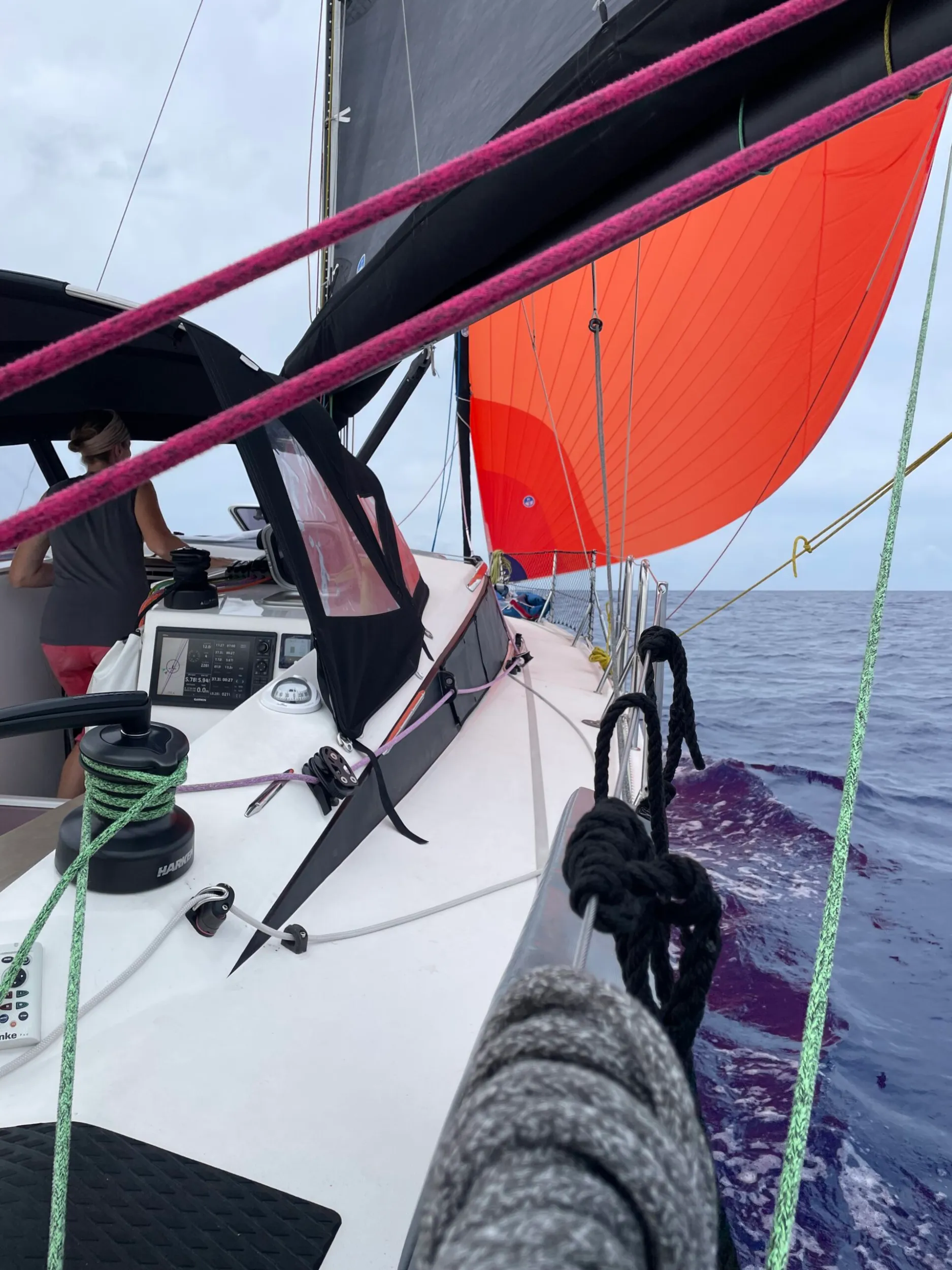
Downwind in ten knots true wind, on a reasonably calm sea and on a true angle of 175 degrees, with the gennaker on the opposite side, and with one kilowatt on the engine, there is stability in the boat, form stability in the sails and five knots of boat speed. And you speed up instantly at momentary gusts. You have to find out the required power inputs for motorsailing at the different wind angles, wind forces and sea states, and it is fun.
OK, and sometimes we cheat. On our way back, sailing to Lorient, in a feather-light wind, going downwind we slightly motorsailed and overtook an RM 1180. I believe the owner watched us from a distance with binoculars to see if we had our diesel engine on, which we had not. He must have torn his hair out.
Would I choose electric again?
Coming back to the question, Jean-Baptiste: Yes, I would choose electric again, and I hope this story might support the ones who opt for electric propulsion.
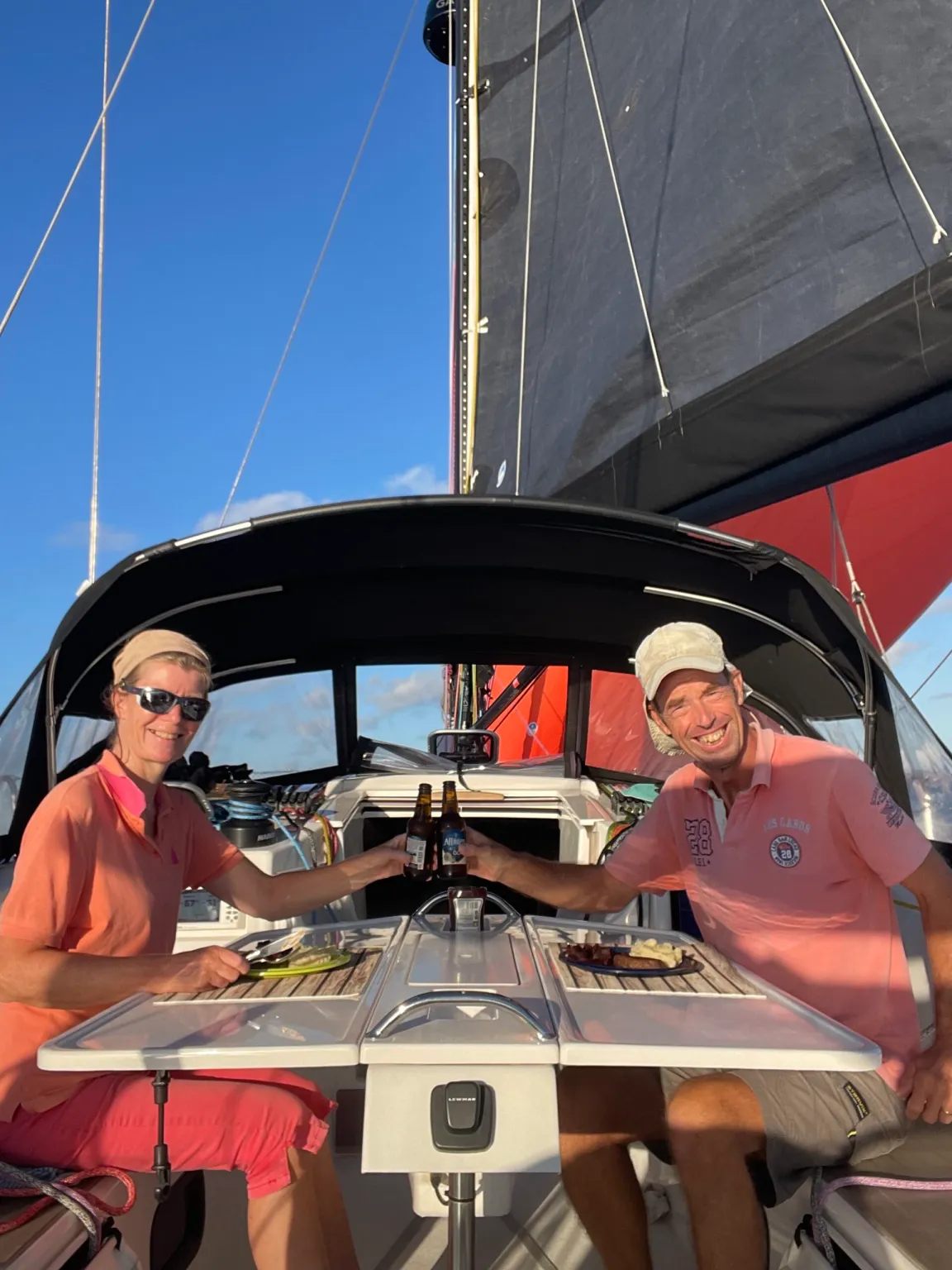
And secondly, coming back to our original plan of circumnavigating the globe. When we sailed from Cabo Verde to Suriname, we mainly had strong winds, 7 to 8 Beaufort. My wife Ester was seasick for two weeks. She ate very little, lost a few pounds and had very little energy.
For this and other family matters, we changed our plan into a one-year Atlantic tour, which we enjoyed very much. Also Ester did after that decision, since she was very little seasick afterwards. Many friends said ‘Go back to Panama’ …, but now we are almost in Den Helder.